Both options can be strong, slim and durable. The practical difference is hidden inside the frame: one uses continuous aluminium, while the other separates the indoor and outdoor sections with a less conductive barrier. That change can affect comfort and condensation risk, but the right choice still depends on the climate, room and complete window specification.
The short answer
Choose a thermally separated frame when the window forms part of a heated or air-conditioned room and indoor comfort is important. Its insulating barrier slows the direct flow of heat through the aluminium, so the inside face of the frame is less affected by outdoor temperatures.
A standard aluminium frame can still be suitable for an unconditioned area, a mild climate or a project where thermal performance is not a priority. It normally costs less and retains the familiar strength and slim appearance of aluminium.
The label on the frame is only the beginning of the comparison. Glass, spacers, seals, window size and installation can change how the finished unit performs, so two quotations should be compared as complete systems rather than by frame type alone.
What is the difference inside the frame?
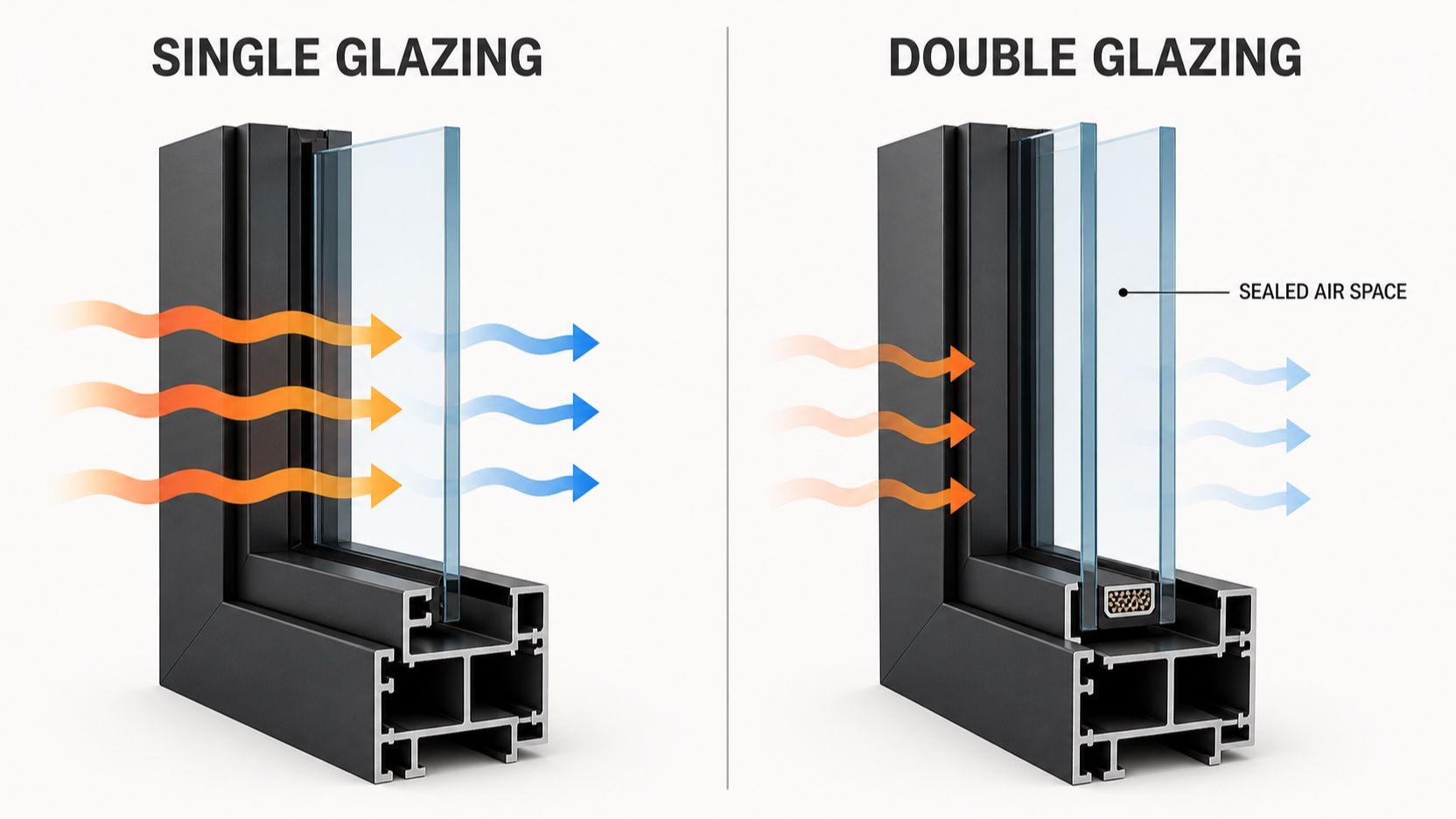
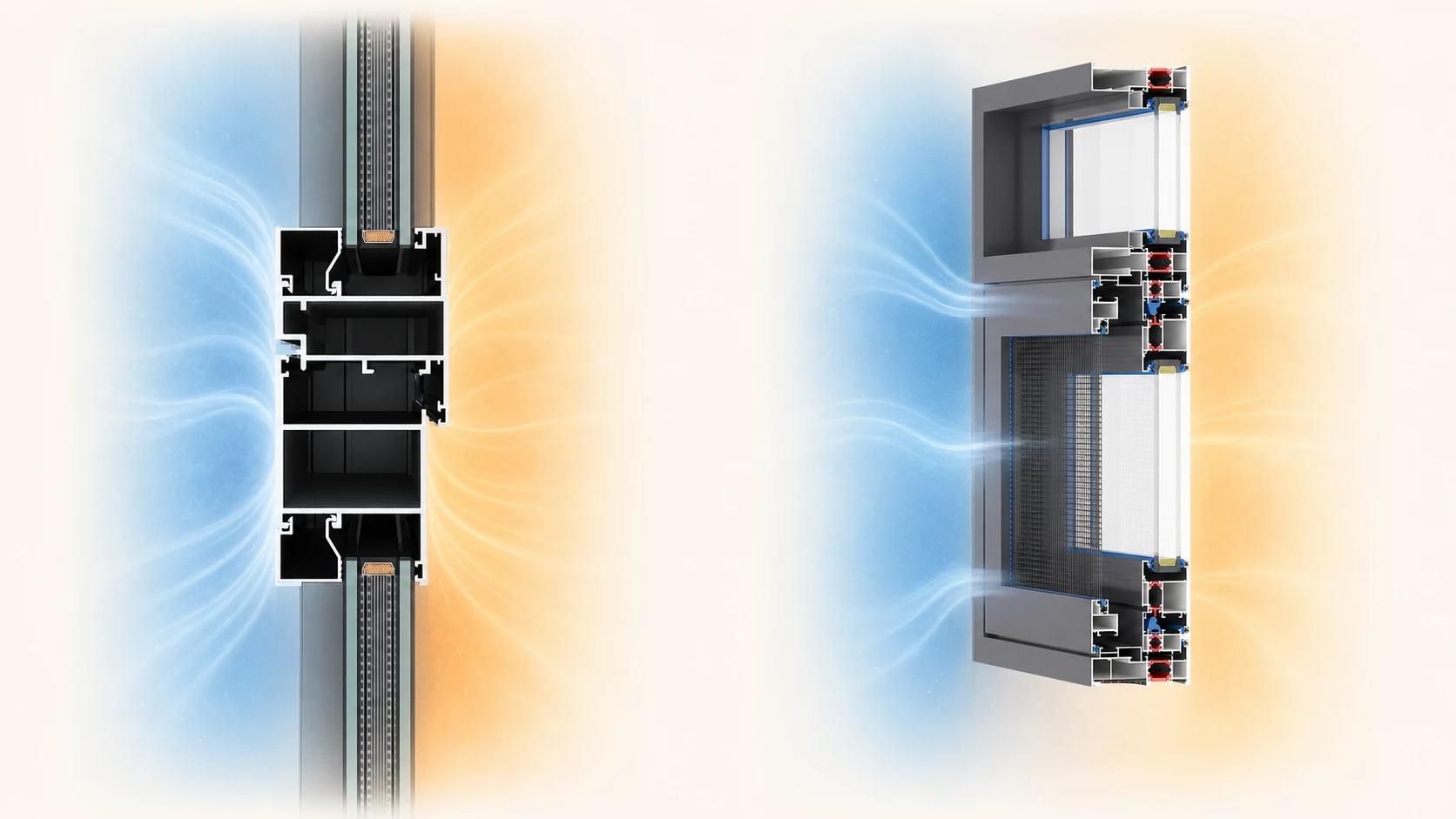
A conventional profile is a continuous piece of metal between the outdoor and indoor faces. Aluminium conducts heat easily, so this uninterrupted path acts as a bridge between the two environments.
An insulated profile is made from separate exterior and interior aluminium sections joined by a structural material that conducts far less heat. The barrier does not make the frame heatproof. It simply adds resistance where there would otherwise be a direct metal path.
Glass-fibre-reinforced polyamide is common in strip-based systems, while other barrier technologies also exist. The material, width and shape can all influence performance, which is why the actual system data is more useful than the words ‘thermal break’ by themselves.
What changes in everyday use?
The most noticeable difference is often the temperature of the interior frame surface. In cold weather, a continuous metal frame can feel much colder than the room. In hot conditions, it can carry more outdoor heat towards the inside.
A surface that stays closer to the indoor temperature can make the area beside a large window feel more comfortable. This matters most near beds, desks, sofas and other places where people spend time close to the glazing.
A warmer interior frame in winter may also reduce the likelihood of surface condensation. It cannot guarantee a dry window because indoor humidity, ventilation, glass temperature, weather and installation details still affect when moisture forms.
The separated design can reduce heat flow through the frame, but it does not provide a fixed saving on energy bills. Actual energy use depends on the whole building, its climate, glazing area, insulation, air leakage and heating or cooling habits.
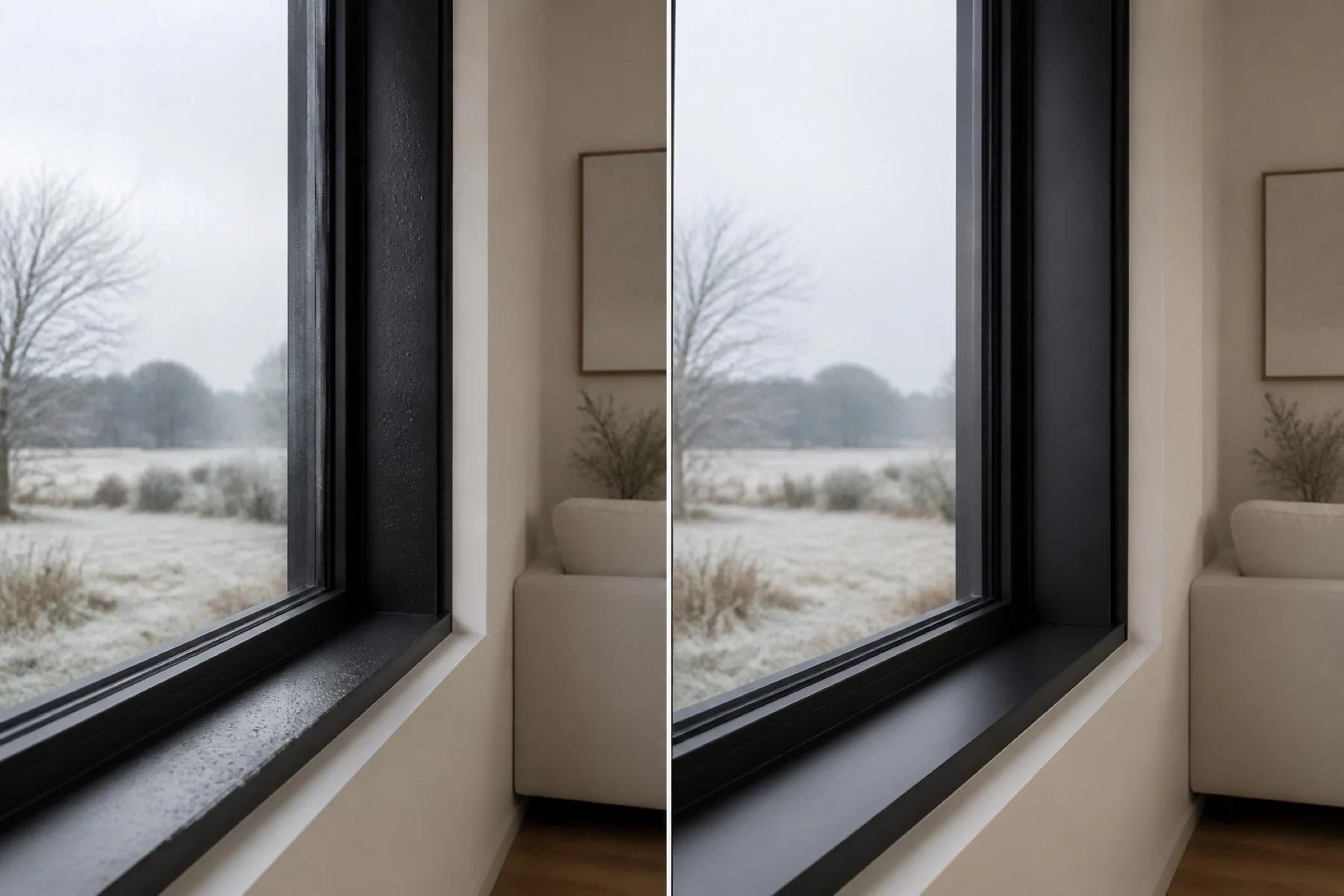
Side-by-side comparison
The table below describes the usual differences. It is a starting point rather than a substitute for the tested or calculated data of the exact window being quoted.
| Consideration | Standard aluminium frame | Thermally separated frame |
|---|---|---|
| Frame construction | Continuous aluminium connects the outside and inside faces | A structural insulating barrier separates the two aluminium sections |
| Indoor frame surface | More strongly influenced by outdoor temperature | Usually remains closer to the indoor temperature |
| Comfort near the window | Can feel colder in winter or warmer in hot weather | Often improves comfort beside large areas of glazing |
| Condensation potential | A colder interior surface can increase risk in winter | Risk may be lower, but moisture is not eliminated |
| Initial cost | Usually lower because the profile and assembly are simpler | Usually higher because the frame uses additional materials and processing |
| Typical fit | Unconditioned spaces, mild conditions or projects without a thermal target | Conditioned rooms, colder or hotter climates and comfort-focused projects |
| What to verify | Complete window specification and suitability for the application | Whole-window values and documents for the proposed configuration |
When can a standard aluminium frame make sense?
The lower-cost option is not automatically a poor choice. It can be appropriate when the opening separates two spaces with similar temperatures or when the room is not regularly heated or cooled.
Examples may include some garages, storage areas, workshops, internal screens and sheltered outdoor rooms. Local climate and building requirements still need to be checked because the same space can behave very differently in another region.
It may also be reasonable for a mild-climate project with modest glazing and no specific frame-performance target. In that case, money may be better directed towards suitable glass, weather sealing or another part of the building envelope.
The decision should be documented rather than assumed. Ask whether comfort, condensation or compliance could become a concern later if the space changes use or receives heating and cooling.
When is an insulated frame usually worth considering?
A separated profile is usually the stronger candidate for bedrooms, living areas and workspaces that are occupied for long periods. These rooms benefit more from stable surface temperatures and reduced heat flow at the edge of the glazing.
Large windows and glazed doors deserve particular attention because they create more contact between indoors and outdoors. Even when the glass performs well, a continuous metal perimeter can remain a weak point around the opening.
Colder winters, hot summers or a large difference between indoor and outdoor temperatures make the barrier more relevant. The same applies when condensation has already been observed on metal frames.
Projects following an energy target or a local compliance pathway may also require a better-performing frame. The requirement should be confirmed using the project method and the proposed whole-window values, not a generic product claim.
The frame is not the whole window
A good frame cannot compensate for every other weakness. The centre of the glass, its edge and the junctions around the sash all provide separate paths for heat, air and moisture.
Double or triple glazing may use low-emissivity coatings, gas-filled cavities and warmer edge spacers. These elements should be selected together with the frame because changing the glass build-up can change the performance of the complete unit.
Gaskets and hardware help the sash close consistently. Gaps, poorly compressed seals or unsuitable drainage details can undermine comfort even when the aluminium profile itself is well designed.
Installation completes the thermal and weather line between the window and wall. Perimeter insulation, air sealing, flashing and the surrounding construction therefore belong in the same review.
Acoustic performance is also a separate question. Glass thickness, laminated layers, cavity size, seals, wall interfaces and installation gaps usually matter more than the presence of an insulating strip alone.
Read the beginner guide to thermal breaks in aluminium windows
How to compare two window quotations
Start by checking that both suppliers are pricing the same opening sizes, glass and operating types. A lower figure is difficult to interpret when the underlying configurations are different.
- Confirm whether each frame is continuous aluminium or thermally separated, and ask what barrier system is used.
- Ask whether the quoted thermal figure applies to the frame only or the complete window, including the proposed glass.
- Record the glass build-up, coatings, gas fill and edge spacer rather than accepting ‘double glazing’ as a complete specification.
- Compare air infiltration, water penetration and structural information where the project requires them.
- Check that reports relate to the proposed product family, opening type, size range and configuration.
- Include finishes, hardware, screens, packaging, installation scope and delivery when comparing the final cost.
- Ask how substitutions or design changes will be reviewed before production begins.
Frequently asked questions
Are thermally broken aluminium windows always better?
- They generally provide better frame insulation, but ‘better’ depends on the application. An unconditioned space may not benefit enough to justify the additional cost, while an occupied room in a demanding climate often will.
Will an insulated aluminium frame stop condensation?
- No. It may keep the interior frame surface warmer and reduce risk, but condensation can still occur when humidity is high or other parts of the window become cold enough.
Does a thermal break make the window soundproof?
- No. Noise control depends mainly on the complete glazing, seals, frame joints and installation. The insulating barrier should not be treated as an acoustic specification by itself.
Can I compare products by the width of the insulating strip?
- Strip width can provide context, but it does not describe the complete design. Compare declared or tested values for the proposed window, then check the glass, size and test method behind them.
Which option should I request for my project?
- Share the project location, opening sizes, room use, glass requirement and any performance target. Those details allow the two frame approaches to be compared against the same brief.