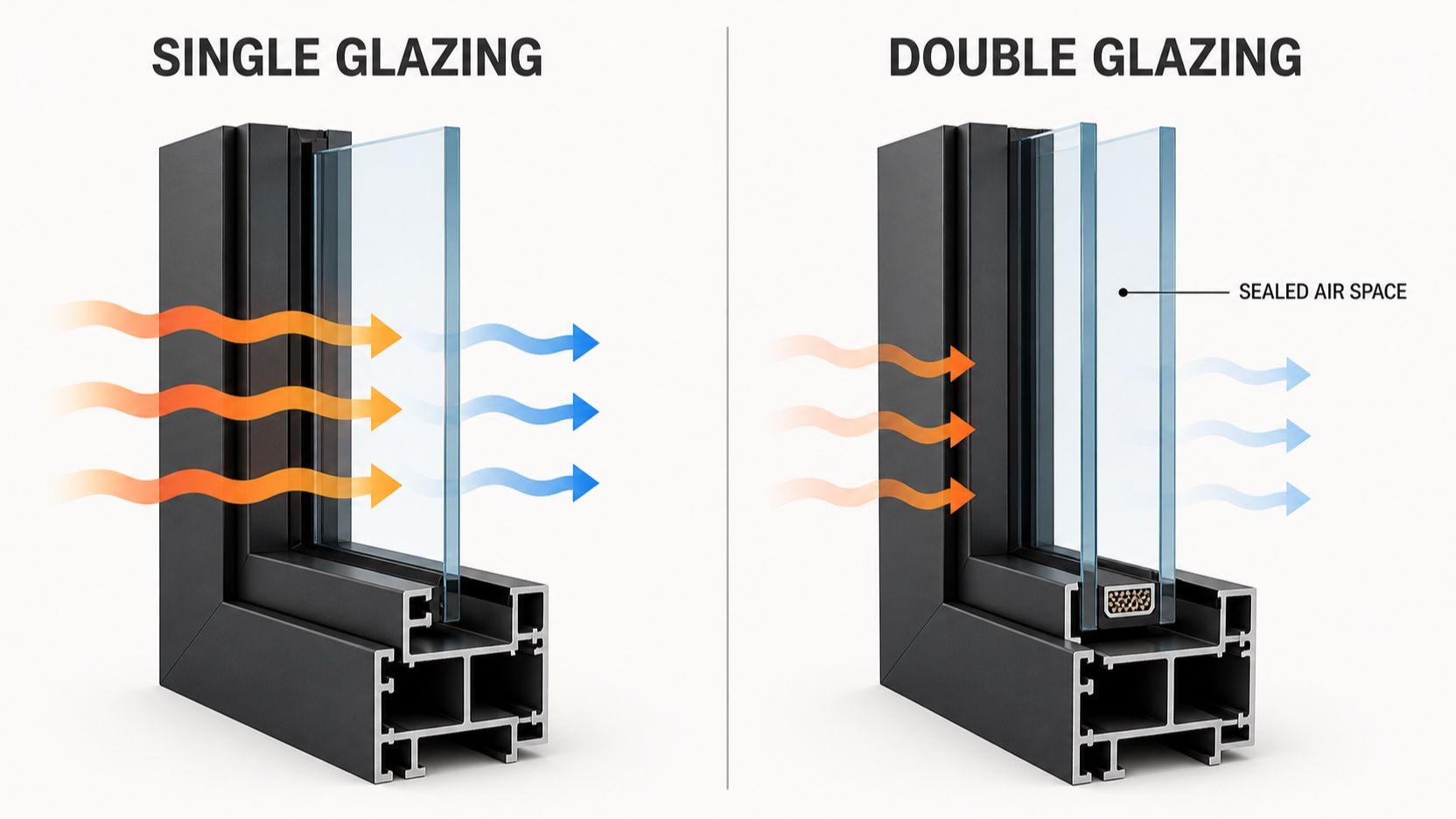
Two aluminium windows can both have double glazing yet offer different levels of insulation. Part of the difference may be hidden inside the frame.
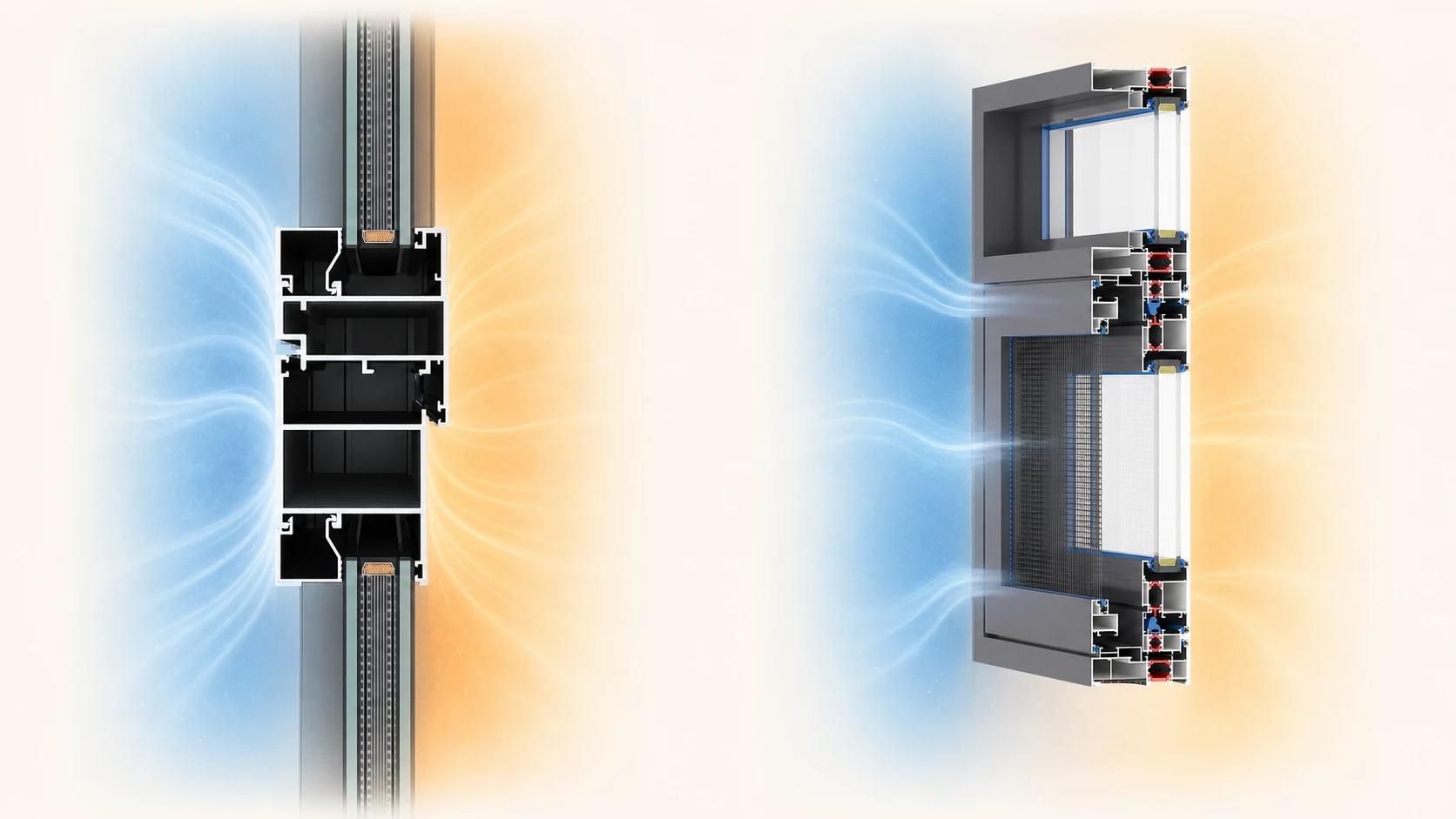
Thermally broken aluminium windows separate the indoor and outdoor sections of the frame with a less conductive material. Some systems also use chambers and insulating inserts to manage heat transfer. Those details matter, but a higher chamber count does not automatically make a better window.
If you are choosing energy efficient aluminium windows for an Australian home, start with the frame and glass together. Then compare the whole-window ratings against your climate, orientation and shading.
How a Thermal Break Changes an Aluminium Frame
Aluminium is light, strong and durable. It also conducts heat readily.
On a cold evening, heat can travel through a conventional aluminium frame from the room towards the outdoors. When it is hotter outside, heat can move in the opposite direction. The continuous metal provides a path between the two environments.
A thermal break interrupts that path. Instead of one continuous aluminium section, the frame has separate interior and exterior sections joined by a less conductive structural material.
The Australian Government’s Your Home guide describes this connection as a structural insulator, typically a low-conductivity polymer. It holds the sections together while reducing heat flow through the frame. Your Home: Glazing
That is the basic purpose of a thermal break. How well a particular window performs still depends on the complete design.
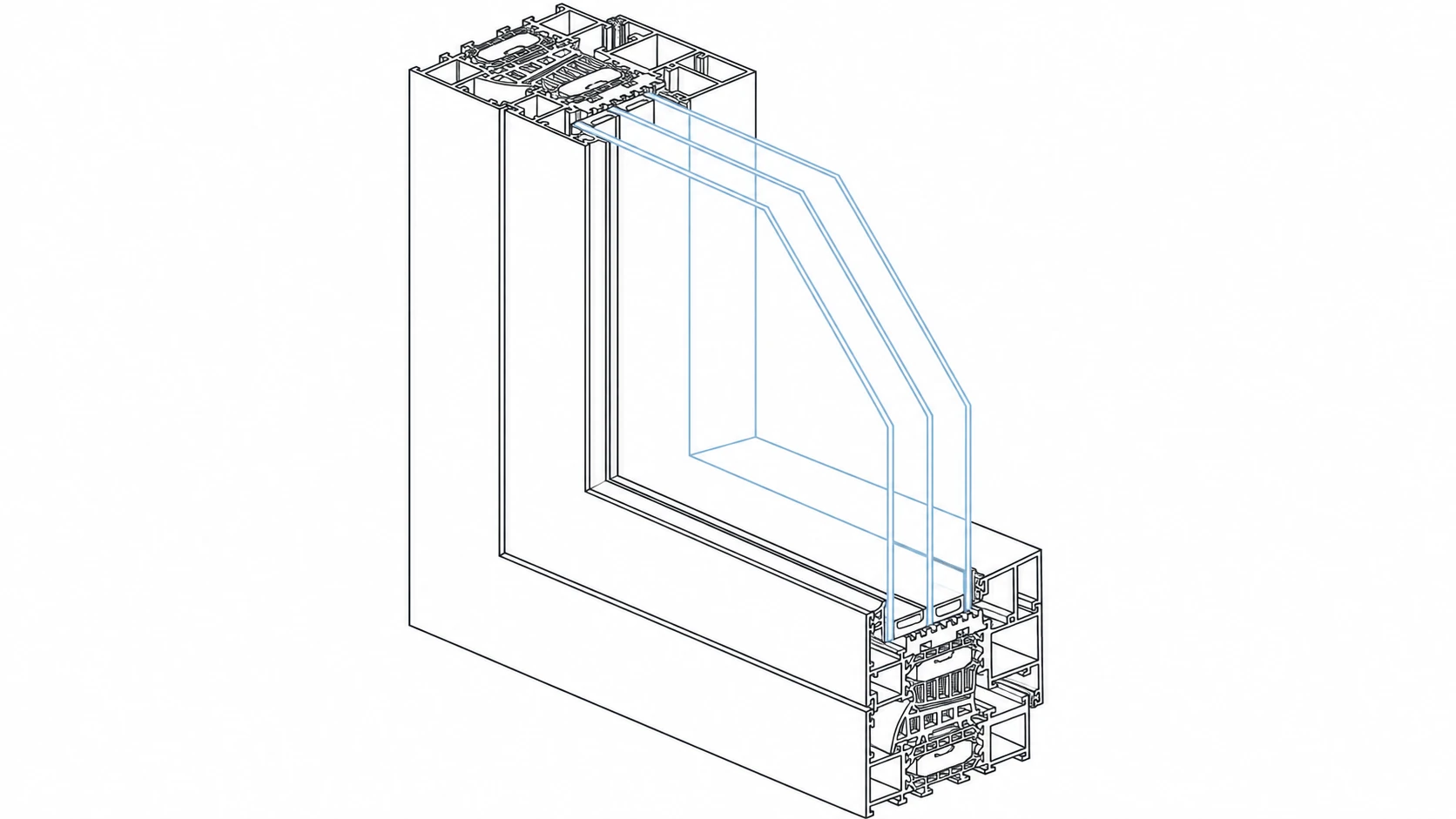
Do More Frame Chambers Improve Insulation?
Chambers can help when they are positioned and designed to improve the insulation zone. Counting them, however, tells you little about the materials separating them or the paths heat can take through the frame.
Separating the indoor and outdoor aluminium sections reduces direct conduction, but convection and radiation within the insulation zone also need attention. Hollow profiles and internal fins can limit air movement, while low-emissivity surfaces and insulating foam provide other ways to improve thermal performance.
The practical implication is that chamber position, materials and arrangement matter alongside the number. Subdividing an insulating zone is not necessarily equivalent to adding cavities elsewhere in an aluminium profile.
Choosing Glass for Aluminium Windows: What the Tables Show
The frame is only part of the comparison. Clear, tinted and different Low-E glazing options can produce different combinations of insulation, solar heat gain and daylight transmission.
The following tables reproduce the reference ranges shown in the NFRC consumer guide’s metal-frame charts, with an additional metric conversion column for Australian readers. Original charts
The terms used are:
- U-factor: thermal transmittance. Lower values indicate better insulation.
- SHGC: solar heat gain coefficient. Lower values mean less solar heat enters.
- VT: visible transmittance. Higher values mean a greater proportion of visible light passes through.
- Low-E: low-emissivity glass. HSG, MSG and LSG identify high-, moderate- and low-solar-gain types.
The original U-factors use Btu/(h·ft²·°F). Multiplying by approximately 5.678 converts them to W/(m²·K); the converted values below are rounded to two decimal places. SHGC and VT do not require conversion. NFRC: unit conversion
| Glazing | Original U-factor (Btu/(h·ft²·°F)) | Approx. metric U-value (W/(m²·K)) | SHGC | VT |
|---|---|---|---|---|
| Single glazing | ≥1.00 | ≥5.68 | >0.60 | >0.60 |
| Double clear | 0.71–0.99 | 4.03–5.62 | >0.60 | >0.60 |
| Double tinted | 0.71–0.99 | 4.03–5.62 | 0.41–0.60 | 0.51–0.60 |
| Double high-solar-gain Low-E (HSG) | 0.56–0.70 | 3.18–3.97 | 0.41–0.60 | >0.60 |
| Double moderate-solar-gain Low-E (MSG) | 0.56–0.70 | 3.18–3.97 | 0.26–0.40 | 0.51–0.60 |
| Double low-solar-gain Low-E (LSG) | 0.56–0.70 | 3.18–3.97 | ≤0.25 | 0.51–0.60 |
| Glazing | Original U-factor (Btu/(h·ft²·°F)) | Approx. metric U-value (W/(m²·K)) | SHGC | VT |
|---|---|---|---|---|
| Double clear | 0.56–0.70 | 3.18–3.97 | >0.60 | >0.60 |
| Double tinted | 0.56–0.70 | 3.18–3.97 | 0.41–0.60 | 0.41–0.50 |
| Double high-solar-gain Low-E (HSG) | 0.41–0.55 | 2.33–3.12 | 0.41–0.60 | 0.51–0.60 |
| Double moderate-solar-gain Low-E (MSG) | 0.41–0.55 | 2.33–3.12 | 0.26–0.40 | 0.51–0.60 |
| Double low-solar-gain Low-E (LSG) | 0.41–0.55 | 2.33–3.12 | ≤0.25 | 0.51–0.60 |
Read across a row to see the balance between insulation, solar heat and light. Then compare the same glazing category between the tables.
For example, the reference U-factor range for double-clear glazing falls from 0.71–0.99 with a conventional metal frame to 0.56–0.70 with a thermally broken frame. The Low-E rows show another distinction: similar U-factor ranges can sit alongside different SHGC values.
These are broad reference categories, not a controlled comparison of two specific products. The original charts describe the results as averages and note that performance varies with design and materials.
The tables are not Australian compliance thresholds or universal product limits. Converting the units does not turn US reference data into AFRC/WERS-certified results. Use the applicable rating information for the actual window being quoted.
What Does Window U-Factor Tell You?
U-factor and U-value describe thermal transmittance. For Australian window specifications, look for the whole-window U-value, Uw, expressed in W/(m²·K). Lower values mean greater resistance to heat flow.
The word “whole” matters. A frame-only value, Uf, or a centre-of-glass value does not describe the complete assembly and cannot replace Uw.
Also check the whole-window solar heat gain coefficient, SHGCw. It ranges from 0 to 1 and describes the proportion of incident solar energy admitted through the window.
Uw and SHGC answer different questions. Uw concerns heat transfer caused by a temperature difference; SHGC concerns heat gained from sunlight. A window can insulate well while still admitting substantial solar heat. AGWA: performance data
In Australia, the Window Energy Rating Scheme (WERS) provides whole-window performance ratings under Australian Fenestration Rating Council procedures. Its data supports window selection and NatHERS home energy assessments. A window’s WERS rating is separate from the energy star rating of the complete house. How WERS works
For a useful comparison, keep the rating information alongside the quoted frame and glazing configuration.
Choosing Energy Efficient Aluminium Windows for Your Climate
The same glazing choice will not suit every elevation or every Australian home.
- In hot climates such as Darwin, limiting unwanted solar heat is a priority. Lower SHGC values and effective shading can help. A lower Uw also benefits air-conditioned rooms.
- In cooler climates such as Hobart and Canberra, a lower Uw helps reduce winter heat loss. Suitable north-facing windows can admit useful winter sunshine, with shading to manage summer exposure.
- In climates with both heating and cooling needs, such as Sydney, Perth and Adelaide, the choice needs to balance seasonal conditions, orientation and shading.
These principles are discussed in the Australian Government’s Your Home glazing guide.
When comparing thermally broken aluminium windows, bring the discussion back to your home: where the window faces, how much sun it receives and which frame-and-glass configuration the rating covers. That gives the chamber count a useful context—and gives you a better basis for comparing quotes.
Have questions about thermally broken aluminium windows? Speak with a FENALTO window specialist for guidance on frame and glazing options suited to your climate, comfort goals and project requirements.