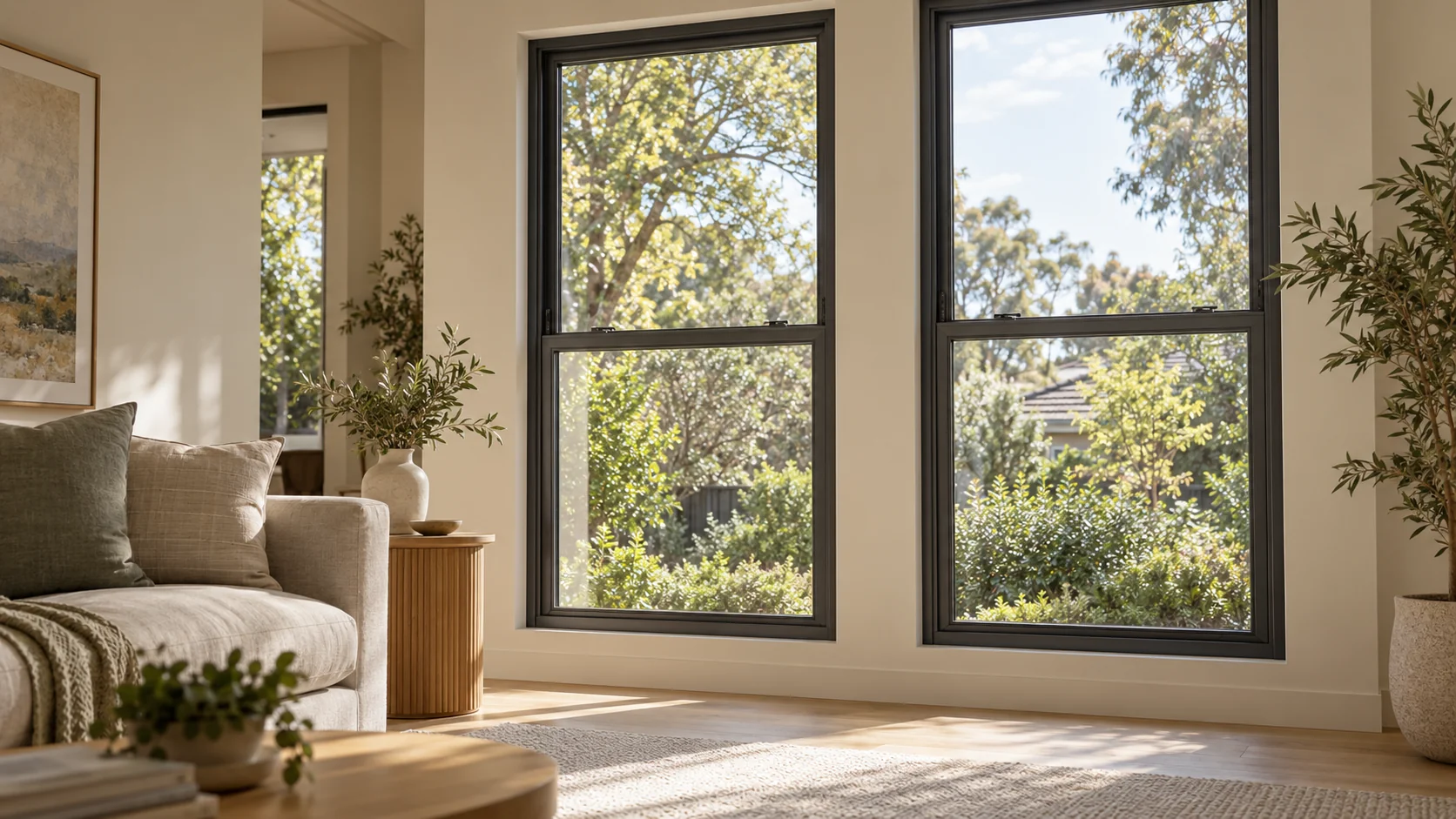
Single-hung and double-hung windows look almost identical. Both have two vertically stacked sashes, with a horizontal line where they meet. In everyday use, however, their operation, cleaning options and cost can differ.
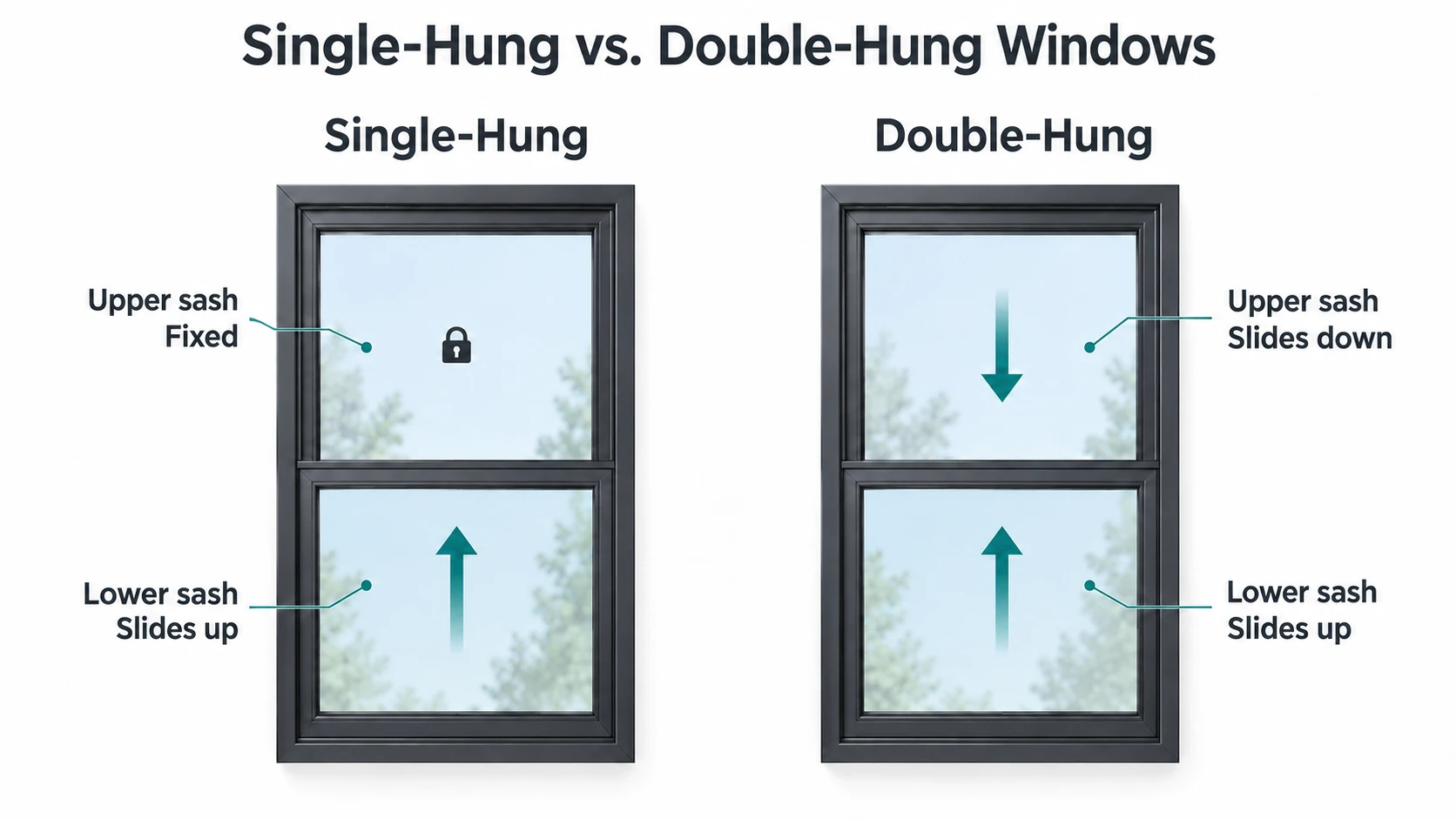
The main difference is simple: only the lower sash moves on a single-hung window, while both sashes move on a double-hung window.
A double-hung window gives you more opening options. Whether those options are worth the additional cost depends on where the window is installed, how you use it and the features of the specific model.
How Single-Hung and Double-Hung Windows Open
A single-hung window has a fixed upper sash and a lower sash that slides upward. When opened, it provides ventilation through the bottom of the window.
A double-hung window has a lower sash that slides upward and an upper sash that slides downward. You can open the bottom, the top or leave openings at both ends. Andersen’s explanation of these window types uses the same distinction.
| Feature | Single-Hung Window | Double-Hung Window |
|---|---|---|
| Upper sash | Fixed | Slides downward |
| Lower sash | Slides upward | Slides upward |
| Ventilation opening | Bottom only | Top, bottom or both |
| Projects outward during normal opening | No | No |
A sash is the glass together with the frame surrounding it. When you open the window, this entire assembly moves.
“Single” and “double” refer to the number of movable sashes, not the number of glass panes. A single-hung window can have double glazing. The name “double-hung” does not tell you its glazing specification.
Both window types slide vertically within their frames rather than swinging outward. This makes them useful beside patios or walkways where an outward-opening sash could get in the way.
They are also different from awning windows, which are hinged at the top and open outward at the bottom. When requesting a quotation, including the English window type or an opening diagram helps avoid confusion.
Differences in Ventilation, Cleaning and Cost
Ventilation: double-hung windows give you more control over the opening position.
If you simply want to lift the lower sash for fresh air, a single-hung window provides that function. A double-hung window also lets you open the top or leave a gap at both the top and bottom.
Under suitable conditions, warm indoor air can leave through the upper opening while cooler air enters through the lower opening. Actual airflow also depends on wind direction, indoor and outdoor temperatures, and the available airflow paths through the room.
Two movable sashes do not mean twice the ventilation. The sashes of a conventional double-hung window still overlap when opened, so they do not create a completely unobstructed opening across the whole frame.
Cleaning: check whether the sashes tilt inward.
Some double-hung windows allow both sashes to tilt into the room, making it possible to clean the exterior glass from inside. This can be particularly useful for upstairs windows.
However, not every double-hung window has this feature, and some single-hung windows also have a tilting lower sash. The exterior of a fixed upper sash still requires another cleaning method.
Before buying, ask the supplier to demonstrate which sashes tilt inward, how to release them and how to return them to their normal position.
Cost: single-hung windows usually cost less when comparing similar specifications.
Within comparable product ranges, single-hung windows typically have fewer moving components and a lower price. Window size, frame material, glazing and installation scope also affect the quotation.
For a useful comparison, match those specifications first. A small single-hung window with basic glazing is not a like-for-like comparison with a large, highly specified double-hung window.
Which Window Is More Energy Efficient?
“Double-hung” may sound like an upgrade, but it describes how a window opens, not its insulation performance.
The glass, frame, seals and installation quality all matter. Two double-hung windows can perform quite differently if their glazing and frame specifications differ.
Two useful ratings to understand are:
- U-factor, also called U-value: measures heat transfer through the window. Lower values indicate better insulation when compared using the same units and rating conditions.
- Solar Heat Gain Coefficient, or SHGC: indicates how much solar heat passes through the window. The appropriate value depends on the climate, window orientation and shading; lower is not automatically better for every home.
Also check whether the rating applies to the whole window or only the glass. A glass-only U-value is not interchangeable with a whole-window U-value because the frame also transfers heat. The Australian Government’s Your Home glazing guide explains how glass and frames both affect thermal performance.
U-factor does not measure air leakage. That requires separate performance information, and the quality of the installed seals matters too.
For aluminium windows, ask whether a thermally broken frame is available and review the whole-window performance data for the proposed configuration. The term “thermally broken” alone does not establish a specific performance level.
How to Choose for Your Home
Start with single-hung windows if budget is a priority and a lower opening meets your needs.
For example, if the exterior glass is easy to access for cleaning and you have little reason to open the top sash, a single-hung window may be a practical choice.
Consider double-hung windows if you want more opening options or easier cleaning of upstairs windows.
Confirm those benefits for the exact model you are considering. If you want to clean both exterior glass surfaces from inside, check that both sashes tilt inward. If you expect to use the upper opening regularly, make sure the sash controls are within reach and comfortable to operate.