If your home gets cold in winter or hot in summer, you regularly use heating or air conditioning, or your design includes large areas of glass, double glazing is usually worth considering. If the climate is mild, the window is small, the room is rarely used, or insulation is not a major concern, single glazing may be enough. The important question is not which option sounds more premium, but which option better suits the way the home will be used.
The short answer
The final choice should reflect the project location, window size, orientation and room use. These common situations provide a practical starting point.
Double glazing is worth considering when:
- The home needs heating in winter or regular air conditioning in summer.
- The windows are large, particularly floor-to-ceiling windows and glazed doors.
- Bedrooms and living areas are used for long periods each day.
- Areas close to the windows often feel too cold or too hot.
- You want to improve comfort and reduce the likelihood of condensation on the glass.
- The home is near a road and you also want to improve some noise control.
Single glazing may be considered when:
- The local climate is relatively mild.
- The window is small and has limited influence on the room temperature.
- It is used in a garage, storage room or another space that is rarely occupied.
- It is used as an internal glass partition, with no need to separate indoor and outdoor temperatures.
- The project has a limited budget and no strong insulation requirement.
What is single glazing?
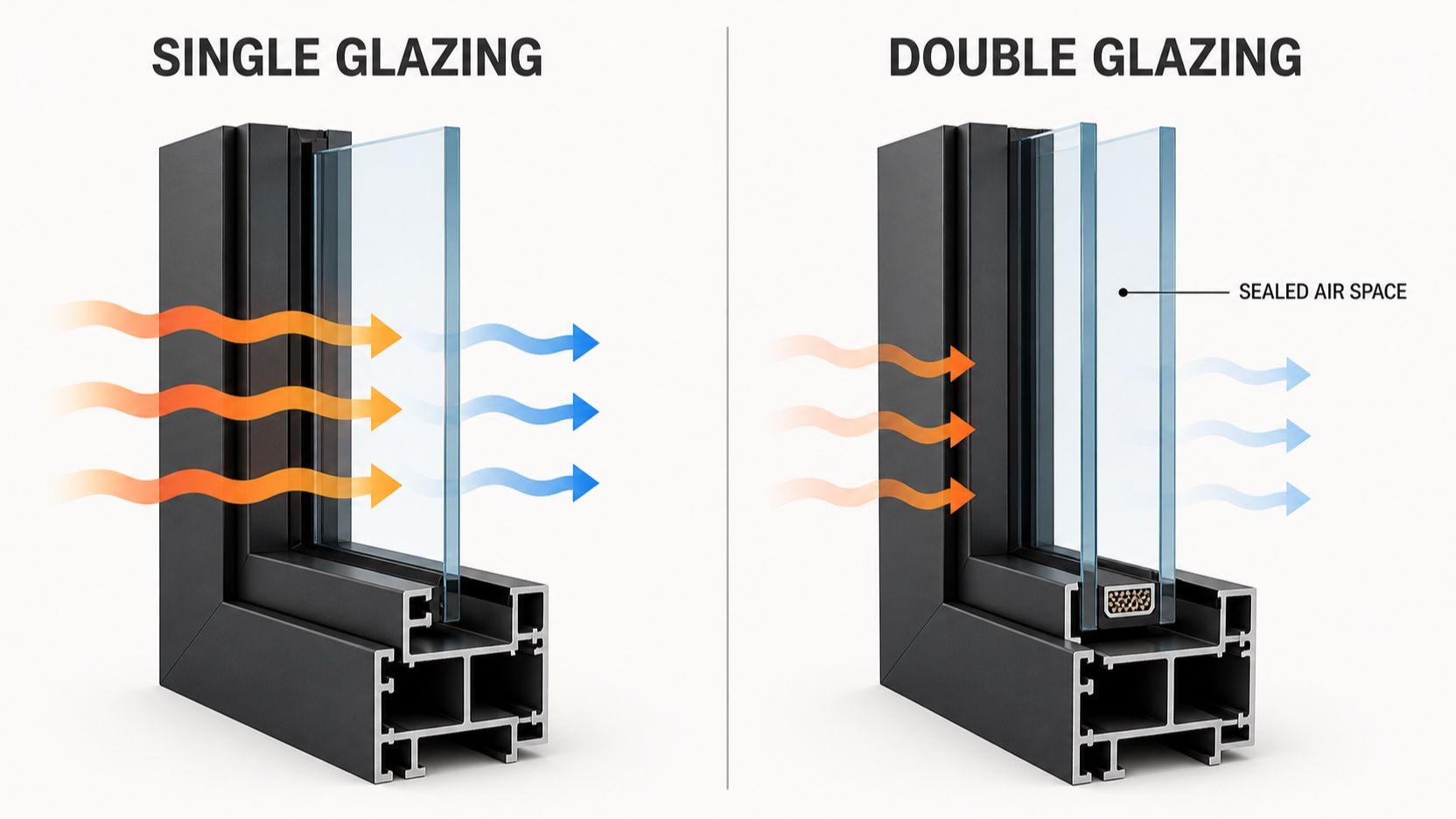
Single glazing means that one pane of glass is installed in the window frame. It has a simple construction and is relatively light. For a small window, an internal partition or a space that does not need to stay comfortable throughout the day, single glazing may meet the practical need.
Its main limitation is insulation. In winter, indoor heat can pass through the glass more readily. In summer, outdoor heat can affect the room more quickly. During cold weather, the inside surface can also become colder, making it more likely that moisture in the indoor air will form droplets on the glass.
Single glazing does not automatically mean unsafe glass. Whether the pane needs to be toughened or laminated is a separate question determined by its position, dimensions and applicable safety requirements.
What is double glazing?
Double glazing uses two panes of glass with a sealed space between them. The space normally contains air or an inert gas such as argon. This gap acts as an insulating buffer and slows the transfer of heat between indoors and outdoors.
It can be compared with the double-wall construction of a cup: the separated layer in the middle helps slow heat transfer. Standard double glazing is not necessarily a vacuum, and it is not simply two panes stuck together.
Because of this sealed space, indoor heat does not escape as quickly in winter, and outdoor heat does not pass inside as quickly in summer. The room temperature can remain more stable, and the area near the window is generally less likely to feel as cold or hot as it may beside single glazing.
What is the practical difference?
The clearest differences appear in insulation, comfort, condensation potential, weight and cost. Double glazing also offers greater potential for noise reduction, but the pane count alone does not make a window soundproof.
| Consideration | Single glazing | Double glazing |
|---|---|---|
| Construction | One pane of glass | Two panes with a sealed space |
| Insulation | Relatively limited | Generally better |
| Indoor comfort | More affected by outdoor temperature changes | Indoor temperature is generally more stable |
| Condensation | More likely during cold conditions | Can reduce the likelihood, but cannot prevent it in every situation |
| Noise reduction | Limited | Greater potential, but not automatically soundproof |
| Weight | Lighter | Heavier |
| Cost | Generally lower | Generally higher |
| Typical use | Small windows, internal partitions and secondary spaces | Bedrooms, living areas, large windows and conditioned rooms |
Is double glazing always worth the additional cost?
It depends on where the budget is spent. In a large living-room window, a bedroom or a room that regularly uses heating or air conditioning, the comfort difference is usually easier to notice. For a very small window in a secondary space, the benefit of spending more may be less significant.
This is often more practical than specifying exactly the same glass for every room without considering how each space is used.
- Prioritise the largest windows and glazed doors.
- Prioritise the rooms used for the longest periods each day.
- Prioritise elevations that become particularly cold in winter or hot in summer.
- Then decide whether secondary spaces need the same glazing specification.
The window frame is also important for insulation
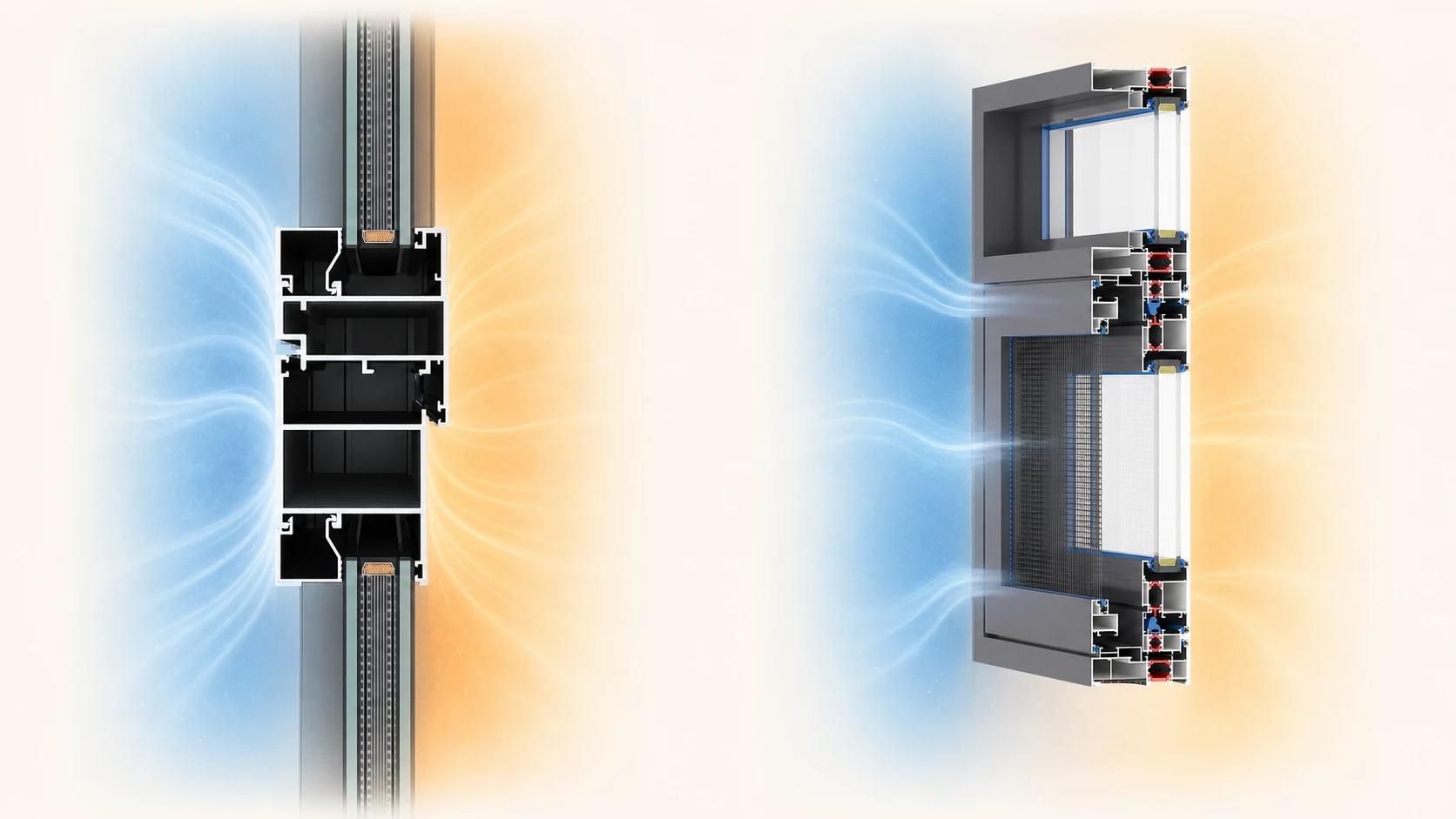
Choosing double glazing does not solve every part of a window’s insulation. The frame surrounding the glass also connects the inside and outside of the building, so it can influence heat transfer too.
Aluminium is strong, durable and well suited to clean window and door profiles, but it also conducts heat readily. In a standard aluminium frame, the interior and exterior sides are connected by continuous aluminium, allowing heat to pass through the frame.
FENALTO thermally broken aluminium systems place a less conductive insulating strip between the inner and outer aluminium profiles. In simple terms, double glazing improves the glazed area, while a thermal break improves the frame area. Considering both provides a more complete approach to the insulation of the whole window.
Actual performance varies with the window type, size and glass configuration. The project location, opening dimensions and the problem you want the window to solve should still guide the selection.
How should you choose?
If the home needs better insulation, regularly uses heating or air conditioning, includes large windows, or would benefit from improved comfort in bedrooms and living areas, double glazing is usually the more suitable option to consider.
If the window is small, the room is rarely used, the climate is mild and the project does not have a strong insulation requirement, single glazing may meet the need.
You do not need to begin by learning a long list of technical specifications. Start with three questions. Clear answers will usually bring you closer to the right option for the home.
- How many hours a day is this room used?
- How large is the window?
- Is the main concern insulation, summer heat, noise or budget?
Speak directly with a team that understands the product
If you are still unsure whether to choose single or double glazing, the fastest and most direct approach is to speak with a manufacturer or specialist team that understands product performance, cost, production limits and delivery arrangements.
General information online can help you form an initial view, but every project has a different location, window size, opening method, budget and use. Sharing those requirements with someone who understands the product is usually more useful than comparing a single label or specification in isolation.
If you are ready to begin, contact FENALTO and tell us what your project needs. We will coordinate with the manufacturing team to help you identify window, door and glazing options worth comparing.