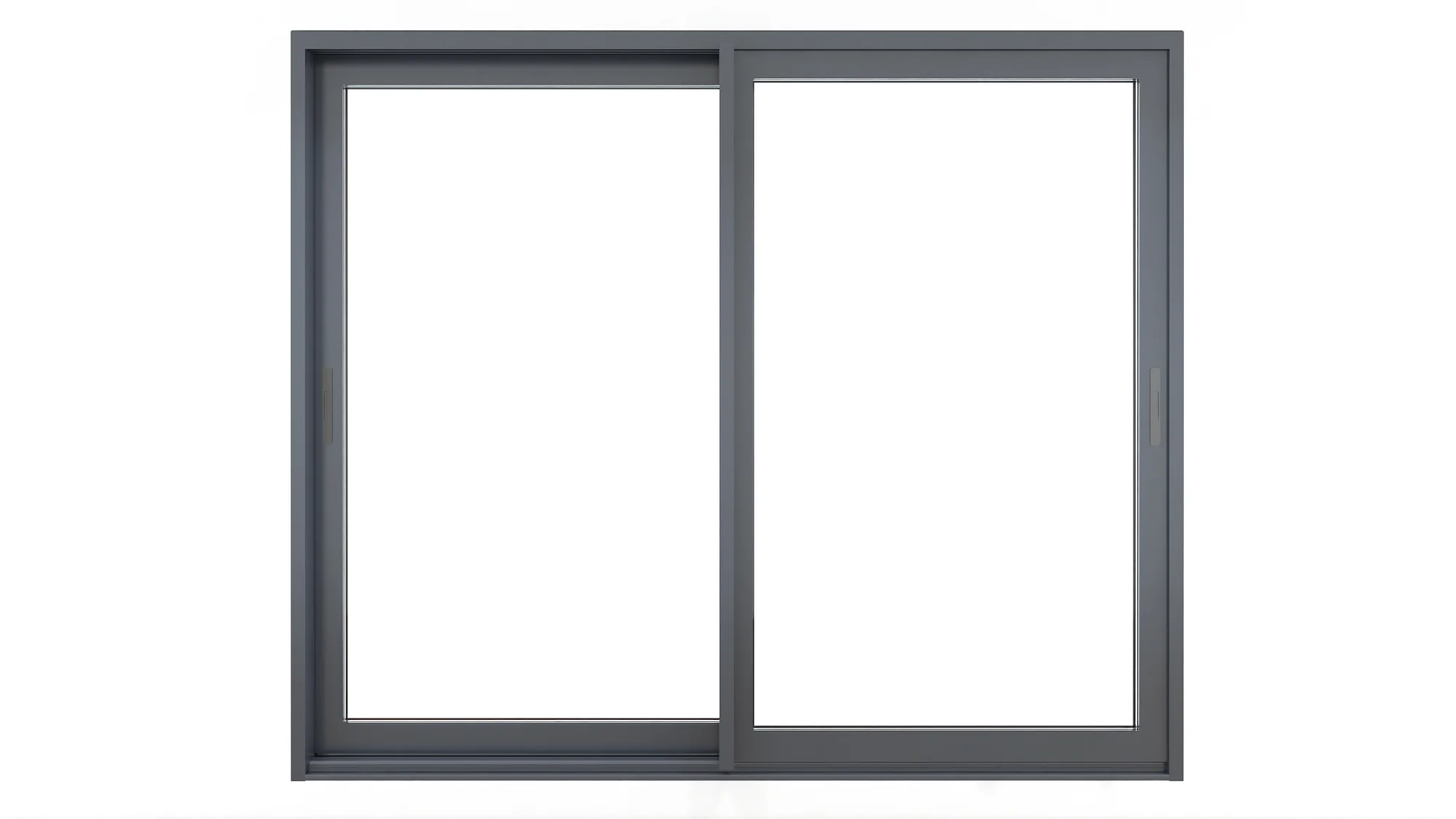
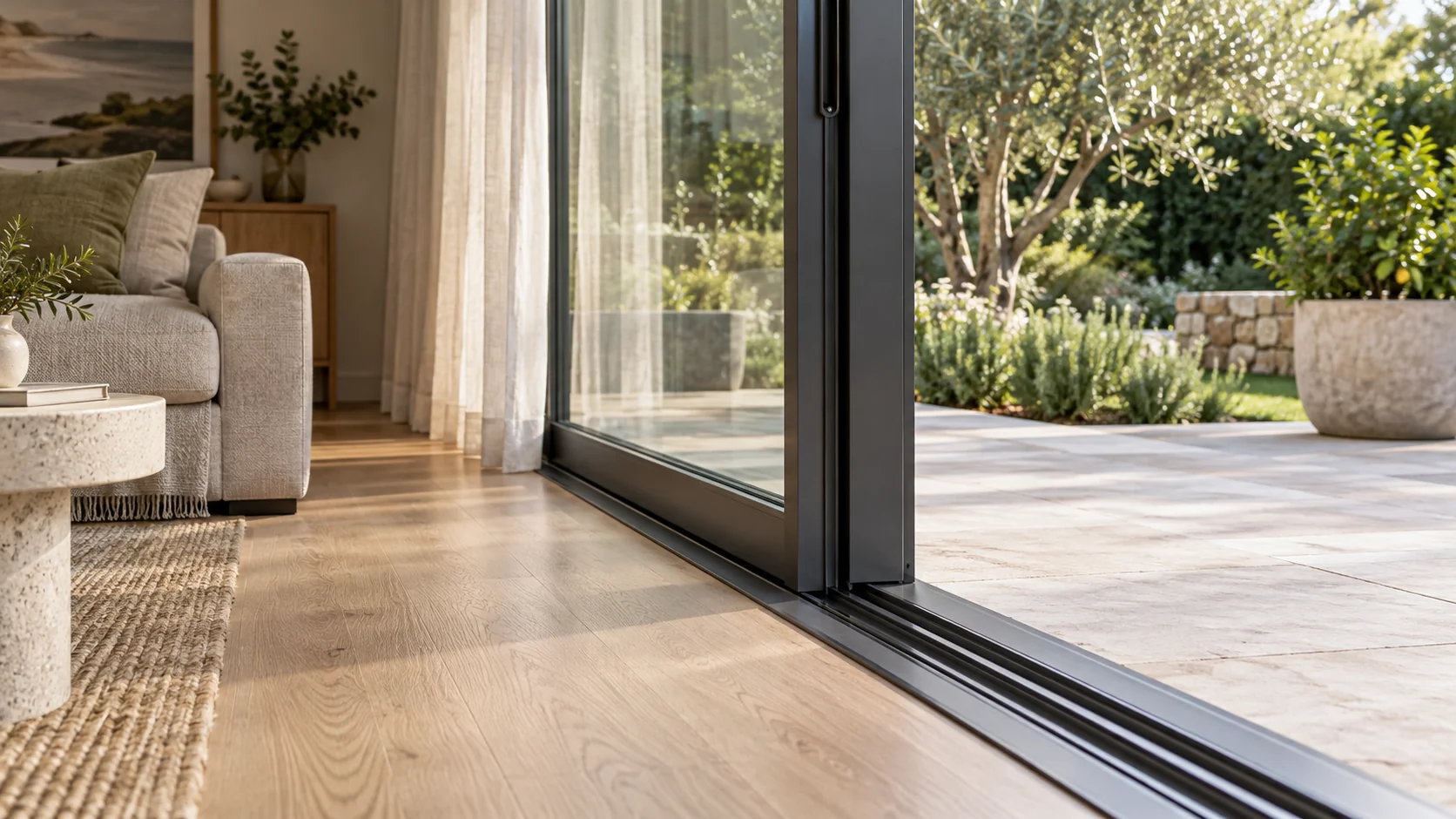
An aluminium sliding door that once moved easily now needs a firm push. You may also hear a gritty sound or scraping as the panel travels along the track.
Start by checking for dirt and debris. If cleaning does not restore smooth movement, the next checks are the panel alignment, rollers and any parts rubbing against the door.
If the panel is visibly scraping the track, stop forcing it. Cleaning can resolve some resistance, but worn rollers, damaged tracks or an incorrectly positioned panel need further attention.
First, Notice When the Door Becomes Difficult to Move
Before contacting your installer or supplier, identify when the problem occurs. This helps narrow down what needs checking.
| What you notice | What to check first |
|---|---|
| The door became difficult to move after building work, with visible grit or dust in the track | Construction debris in and around the track |
| Scraping sounds, with the bottom of the panel appearing to touch the track | Panel height, rollers and points of contact |
| Movement remains difficult after cleaning | Roller condition, panel alignment and other obstructions |
| The panel slides but is difficult to close fully or lock | Closing position, panel alignment and lock engagement |
These symptoms are clues. A noise alone does not confirm that a roller has failed.
Note whether the door has always been difficult to operate or whether the problem is recent. Does it resist movement along the whole track, or catch at one point?
If the door can be moved safely, record a short video showing the bottom of the panel and the track. That can give your installer more useful information than describing the door as “heavy”.
Step 1: Clean the Sliding Door Track
Grit, dust and building debris in the track can interfere with movement. Start with the areas you can reach without removing the glass panel.
- Remove loose debris. If the door moves safely, position it to expose the section you want to clean. Use a vacuum cleaner and a soft brush.
- Wipe away remaining dirt. Follow the product’s care instructions, using a soft cloth and a cleaner suitable for the surface finish.
- Remove residue and dry. Wipe away cleaning residue with a clean, damp cloth, then dry accessible surfaces.
- Test gently. Check whether resistance and noise have improved. Stop if scraping continues.
Avoid scraping the track with metal tools or directing a pressure washer at the door.
Should You Lubricate a Sliding Door Track?
Do not pour oil into the track simply because the door is sticking.
Whether lubrication is needed, where to apply it and which product to use depend on the specific door system. Check the manufacturer’s instructions before applying anything.
Cleaning and lubrication are separate maintenance tasks. Lubricant cannot replace the repair of a damaged component.
Step 2: Check the Rollers and Panel Alignment
Many bottom-rolling sliding doors carry the panel’s weight on rollers running along a track. If the track is clean but the panel still drags, the rollers, panel position and contact points need closer inspection.
Without removing the panel, look for:
- A noticeably uneven gap between the panel edge and the frame as the door approaches the closed position.
- Signs that the bottom of the panel is rubbing against the track.
- Visible track damage.
- Displaced seals or other components interfering with movement.
These observations help describe the problem, but they do not establish the cause on their own. Repeatedly forcing a scraping panel may worsen damage to the track or associated components.
Some sliding doors have roller adjustment mechanisms that change the panel height or alignment. However, there is no single adjustment method that suits every door.
The access points, tools, turning direction and need to take weight off the rollers must be checked against the instructions for that model.
If you cannot find the correct manual, or the work involves lifting or removing a heavy glass panel, contact your installer or supplier. Before buying replacement rollers, confirm the door model and component specification. Similar-looking parts are not necessarily interchangeable.
Ongoing Care: Watch for Changes in Operation
Sliding door maintenance involves more than cleaning the glass. When cleaning the track, also notice changes in movement, visibly loose hardware and seals that appear displaced or damaged.
Follow the manufacturer’s maintenance schedule and consider the surroundings. Homes near the coast, dusty locations and properties undergoing building work need particular attention to deposits and debris.
Contact your installer or supplier if:
- The door still catches or resists movement after cleaning.
- Scraping continues or the track shows damage.
- The panel appears tilted or unstable, or closing and locking are affected.
- Further inspection would require removing the panel.
Have the product model, installation date and details of when the problem started ready. Track photographs and a video recorded only when the door can be operated safely can help explain the issue.
When an aluminium sliding door becomes hard to open, check and clean the track first, then investigate the panel and rollers. If it is scraping, stop forcing it and have the cause assessed.